A Conversation with Those on the Frontlines of War. Followed by: Performance Screening: Traces of Rupture
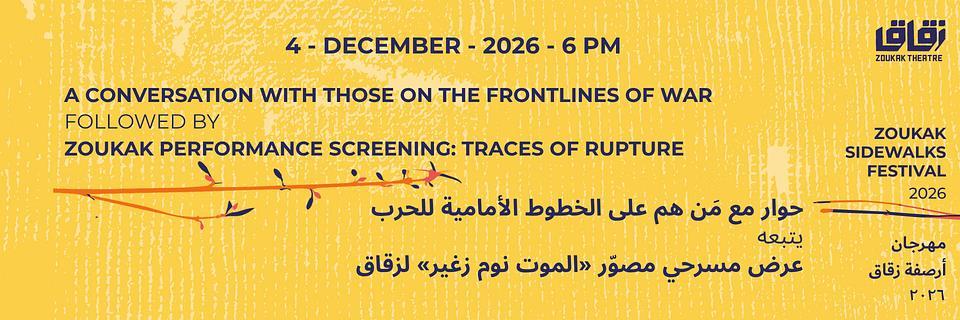
A Conversation with Those on the Frontlines of War. Followed by: Performance Screening: Traces of Rupture
Time: 6–7 PM
Location: Beryte Theatre
Synopsis
In times of war, steadfastness takes many forms, and countless stories of sacrifice unfold in the struggle to save lives and bear witness to the truth.
This conversation gives voice to doctors and paramedics in South Lebanon who remained on the frontlines, risking their own lives to rescue the wounded and recover the bodies of those killed.
In the face of the Israeli war machine and the occupation of our land, they stayed and fought for life.
They will share some of what they have witnessed, the challenges they have faced, and what keeps them going. Through their stories, we will pay tribute to their courage, their commitment, and their tireless efforts to preserve life and human dignity.
The conversation will be moderated by Mohamad Hamdan and will feature Dr. AlChafii Al Fouani from Al-Najdeh Al-Shaabiya Al Loubnaniya in Nabatiyé, journalist Marwa Saab, and paramedics from South Lebanon.
It will be followed by Zoukak Play Screening: Traces of Rupture that explores bodily, emotional, and territorial wounds as sites of memory, resilience, healing, and renewal.
Time: 7–8 PM
Location: Beryte Theatre
Synopsis
A video recording of Traces of Rupture, Zoukak’s latest performance, created in collaboration with musician Layale Chaker, commissioned by Gibellina – Capitale Italiana dell’Arte Contemporanea 2026 and premiered on 20 August at the Greco-Roman Theatre of Segesta, Sicily, as part of the Segesta Theatre Festival.
Traces of Rupture brings storytelling and live music into dialogue with the myth of Asclepius.
Who is Asclepius today?
The question opens a search for contemporary figures of healing: those who treat the injured, recover the dead, reconstruct bodies, and preserve what might otherwise disappear. The ancient healer who could bring the dead back to life becomes a lens through which the performance explores care, death, and regeneration.
Asclepius finds his contemporary counterparts in Gaza and South Lebanon doctors treating bodies devastated by war, surgeons and medical workers, Red Cross volunteers recovering the dead, and those who perform rituals of care and mourning. These stories connect with landscapes transformed by catastrophe. In Gibellina, an earthquake left a vast fissure in the earth, later covered by Il Grande Cretto, like plaster laid across a break, containing rather than repairing what lies beneath. In South Lebanon, explosions carried out by the Israeli occupation have reached an intensity estimated at the equivalent of approximately a magnitude 4.1 earthquake. Here too, the force of destruction has reshaped the earth, while bulldozers and excavators have uncovered graves and remnants of lives they were meant to erase. The performance moves between these landscapes and the body, asking how catastrophe is inscribed in the places we inhabit and in the people who survive it.
Drawing on the healing practices of the temples of Asclepius, including sleep, dreams, cleansing, theatre, and devotion, the performance transforms blood-stained fabric into sculptural fragments of the body. Care becomes mourning; mourning becomes testimony.
Developed through residencies at the Cité internationale de la langue française in Villers-Cotterêts, France, and the MAC – Museo d’Arte Contemporanea “Ludovico Corrao” in Gibellina, Sicily in the summer of 2026.
Credits
Conceived and produced by: Zoukak Theatre
Directed by: Omar Abi Azar
Devised and written by: Lamia Abi Azar, Omar Abi Azar, Mohamad Hamdan, Junaid Sarieddeen, and Maya Zbib
Music composed by: Layale Chaker
Performed by: Lamia Abi Azar, Junaid Sarieddeen, and Maya Zbib, with Layale Chaker on violin
Special appearance by: Andrea Cusumano
Technical direction, lighting design, and operation: Antonella Rizk
Production manager: Mohamad Hamdan
Production coordinator: Jana Bou Matar
Commissioned by: Gibellina – Capitale Italiana dell’Arte Contemporanea 2026
الوقت: من ٦ إلى ٧ مساءً
المكان: المعهد الفرنسي
نبذة
في زمن الحرب، يتّخذ الصمود العديد من الأشكال وتتوالى حكايات لا تُحصى عن التضحية في سبيل إنقاذ الأرواح والشهادة على الحقيقة.
يستضيف هذا الحوار أطباء ومسعفين من جنوب لبنان لإيصال أصواتهم، هم الذين صمدوا في الخطوط الأمامية وخاطروا بحياتهم لإنقاذ الجرحى وانتشال جثامين الشهداء. في مواجهة آلة الحرب الإسرائيلية واحتلال أرضنا، هم من تشبثوا بالأرض وناضلوا من أجل الحياة.
سيشاركوننا بعضًا ممّا شهدوه والتحدّيات التي واجهوها وما يدفعهم إلى الاستمرار. من خلال حكاياتهم، نكرّم شجاعتهم والتزامهم وجهودهم الدؤوبة في سبيل الحفاظ على الحياة والكرامة الإنسانية.
يدير الحوار محمد حمدان، بمشاركة الدكتور الشافعي الفوعاني من النجدة الشعبية اللبنانية في النبطية، والصحافية مروة صعب ومسعفين من جنوب لبنان.
يلي الحوارَ عرض تسجيل مصوّر للعرض المسرحي "الموت نوم زغير" (Traces of Rupture) لمسرح زقاق، الذي يستكشف الجراح الجسدية والعاطفية وتلك التي تطال الأرض بوصفها مساحات للذاكرة والصمود والشفاء والتجدّد.
الوقت: من ٧ إلى ٨ مساءً
المكان: مسرح بيريت
نبذة
تسجيل مصوّر لعرض مسرحية "الموت نوم زغير"، أحدث أعمال مسرح زقاق، الذي أُنجز بالتعاون مع الموسيقية ليال شاكر، وبتكليف من جيبيلّينا – عاصمة الفنّ المعاصر الإيطالية لعام 2026. قُدّم العرض للمرّة الأولى في 20 آب على خشبة المسرح اليوناني الروماني في سيجيستا، صقلية، ضمن مهرجان سيجيستا المسرحي.
يجمع عرض "الموت نوم زغير" بين السرد القصصي والموسيقى الحيّة، في حوار مع أسطورة أسكليبيوس.
من هو أسكليبيوس اليوم؟
يفتح هذا السؤال باب البحث عن شخصيات معاصرة تُعنى بالشفاء: أولئك الذين يعالجون الجرحى ويستعيدون جثامين الموتى، أولئك الذين يعيدون ترميم الأجساد ويحفظون ما قد يندثر لولا جهودهم. تصبح شخصية المعالج الأسطوري القديم، الذي كان قادرًا على إعادة الموتى إلى الحياة، عدسةً يستكشف من خلالها العرض مفاهيم الرعاية والموت والتجدّد.
يجد أسكليبيوس نظراءه المعاصرين في جراحي وأطباء غزّة وجنوب لبنان الذين يعالجون أجسادًا أنهكتها الحرب، في العاملين في المجال الطبّي، في المسعفين ومتطوّعي الصليب الأحمر الذين ينتشلون جثامين الموتى وفي أولئك الذين يمارسون طقوس الرعاية والحداد. تتقاطع هذه الحكايات مع مشاهد طبيعية غيّرتها الكوارث كما في جيبيلّينا، حيث خلّف زلزالٌ شرخًا هائلًا في الأرض. غطى هذا الشرخ لاحقًا العمل الفني المعاصر الـكـريـتـو الـكـبـيـر "Il Grande Cretto"، كأنّه طبقة من الجصّ وُضعت فوق تصدّع لتحتوي ما يكمن تحته بدلًا من ترميمه. أما في جنوب لبنان فبلغت التفجيرات التي نفّذها الاحتلال الإسرائيلي شدّةً تُقدَّر بما يعادل زلزالًا بقوّة 4.1 درجات على مقياس ريختر. هنا أيضًا أعادت قوّة الدمار تشكيل الأرض، فيما كشفت الجرّافات والحفّارات عن قبور وآثار حياةٍ كان يُراد محوها. يتنقّل العرض بين هذه الأمكنة والجسد، متسائلًا كيف تنطبع الكارثة في الأماكن التي نسكنها وفي أجساد وذاكرات من ينجون منها.
استلهامًا من ممارسات الشفاء في معابد أسكليبيوس، التي شملت النوم والأحلام والتطهّر والمسرح والتعبّد، يحوّل العرض أقمشةً ملطّخة بالدماء إلى أجزاء من الجسد تتّخذ أشكالًا نحتية، حيث تتحوّل الرعاية إلى حداد والحداد إلى شهادة.
بتكليف من جيبيلّينا , عاصمة الفنّ المعاصر الإيطالية لعام 2026.
جرى تطوير العمل خلال إقامات فنّيّة في المدينة الدولية للّغة الفرنسية في فيلير-كوتريه، فرنسا، وفي متحف الفنّ المعاصر "لودوفيكو كورّاو" (MAC) في جيبيلّينا، صقلية، خلال صيف عام 2026.
فريق العمل
الفكرة والإنتاج: مسرح زقاق
الإخراج: عمر أبي عازار
الإعداد والكتابة الجماعية: لميا أبي عازار، عمر أبي عازار، محمد حمدان، جنيد سري الدين، مايا زبيب
التأليف الموسيقي: ليال شاكر
الأداء: لميا أبي عازار، جنيد سري الدين، مايا زبيب، بمرافقة ليال شاكر على الكمان
ظهور خاص: أندريا كوزومانو
الإدارة التقنية وتصميم الإضاءة وتشغيلها: أنطونيلا رزق
تنفيذ الصوت: كارول أوهير
مدير الإنتاج: محمد حمدان
منسّقة الإنتاج: جنى بو مطر
بتكليف من: جيبيلّينا – عاصمة الفنّ المعاصر الإيطالية المعاصر الإيطالية لعام 2026
By confirming your purchase, you agree to the ticket conditions set by the organiser.
** Fee is tax inclusive